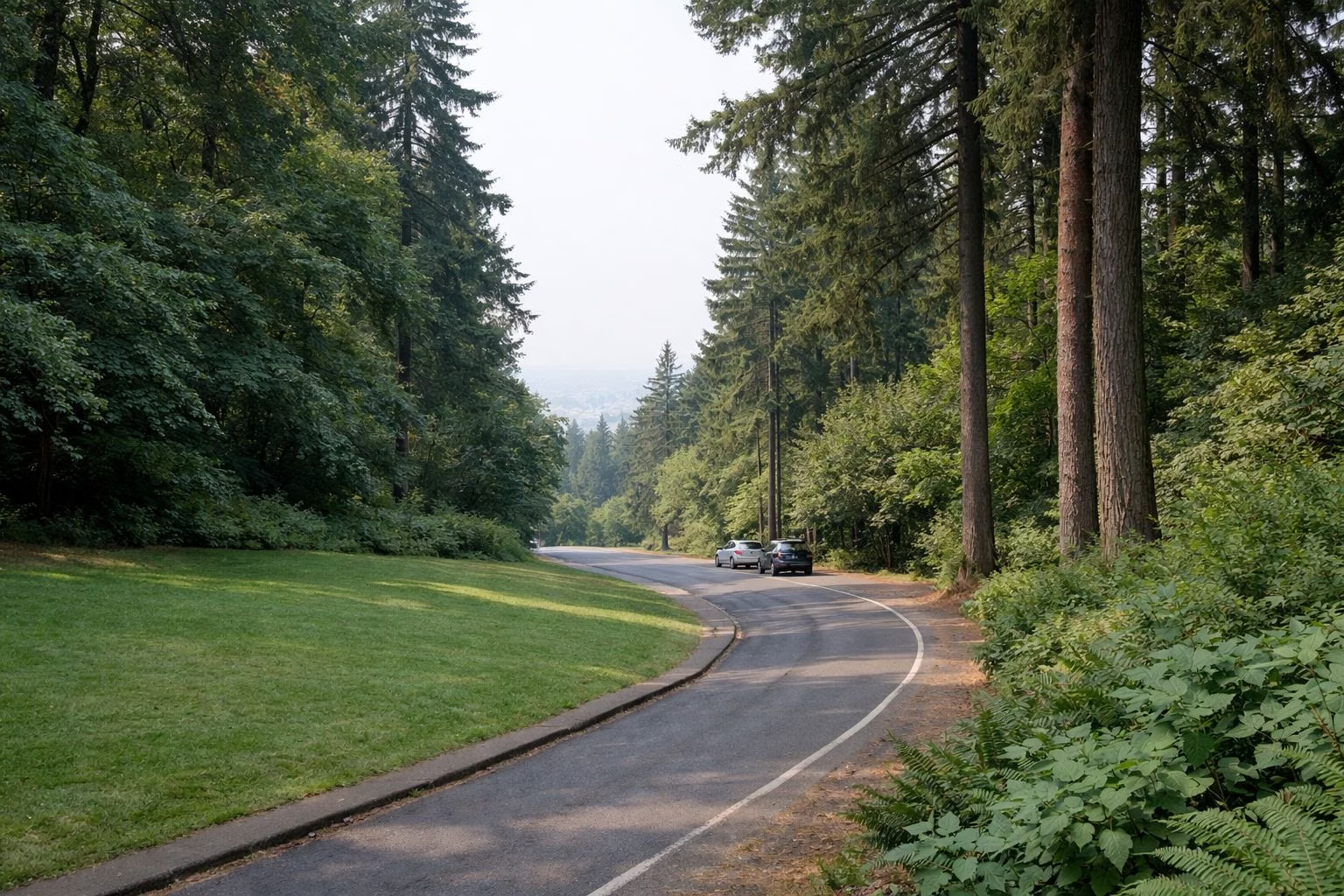
Washington Park, Portland
Washington Park is a 410-acre city park in Portland's west hills and home to five of the city's best-known attractions: Hoyt Arboretum, the International Rose Test Garden, the Portland Japanese Garden, the Oregon Zoo and the World Forestry Center. Portland Parks & Recreation says it draws about 3.5 million visitors a year. The park is open 5 a.m. to 10 p.m., parking is paid, and a free shuttle links every attraction.
Washington Park at a Glance
What's in Washington Park
- Hoyt Arboretum: free, 12 miles of trails through about 6,000 trees from around the world.
- International Rose Test Garden: the city's rose garden, main entrance at 400 SW Kingston Avenue.
- Portland Japanese Garden: next to the Rose Garden at the north end of the park.
- Oregon Zoo: at the south end, by the MAX station. It opened at its present site in 1959.
- World Forestry Center: a forest museum across from the zoo. See World Forestry Center.
- Vietnam Veterans of Oregon Memorial: in Hoyt Arboretum. See the memorial.
- Oregon Holocaust Memorial: near Washington Way and Wright.
The Rose Garden, Japanese Garden and Zoo set their own hours and prices; check their websites before you go.
Getting There
- MAX: the Red and Blue lines stop at Washington Park station, about every 15 minutes according to the city. It is beside the Zoo and the World Forestry Center.
- Bus: TriMet Line 63 runs between Pioneer Courthouse Square and the north end of the park, near the Rose Garden and Japanese Garden.
- Car: all main lots charge $2.52 an hour, up to $15.12 a day, from 9:30 a.m. to 8 p.m. every day. Parking is very limited on warm, sunny weekends. See parking.
The Free Shuttle
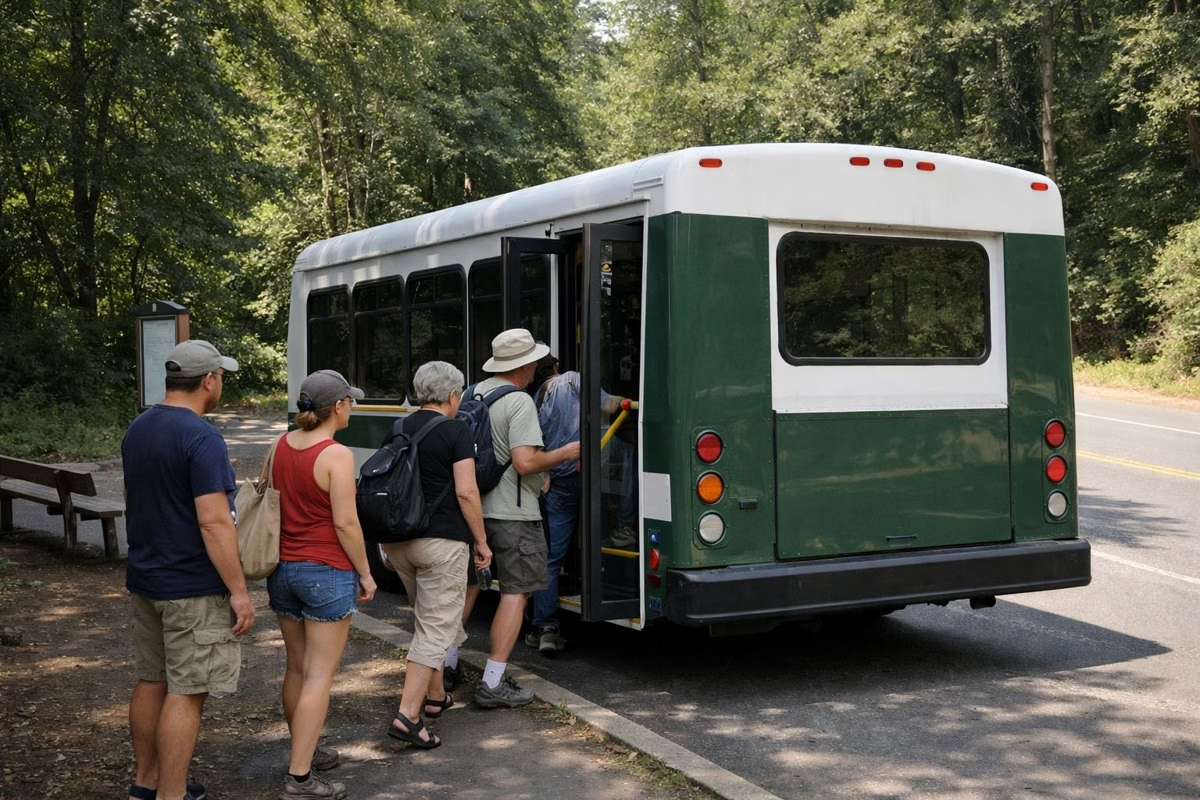
The Explore Washington Park Free Shuttle loops the whole park, stopping at the World Forestry Center, MAX station and Zoo; the Vietnam Veterans Memorial; Hoyt Arboretum; Kingston and Tichner; the Park Place entrance; the Oregon Holocaust Memorial; the Rose Garden and Japanese Garden; and the Archery Range. It runs 9:30 a.m. to 7 p.m. from April to September and 10 a.m. to 4 p.m. from October to March, and stops only at marked stops. No tickets are needed. Pets cannot ride, except service animals. Once you have parked, the shuttle saves paying for parking twice.
A Short History
The city bought the first 40.78 acres in 1871 for $32,624, and the park was called City Park until 1912. John C. Olmsted toured Portland in 1903 and recommended the new name, a main entrance at Park Place, and keeping cars apart from people on foot. In 1922 the county's 160-acre Poor Farm was added; its southern half became the West Hills Golf Course and the rest was set aside as a municipal arboretum in 1928, today's Hoyt Arboretum. See the arboretum's history.
Monuments in the Park
- Chiming Fountain, commissioned in 1891 by the city for $400 and made by Swiss woodcarver John Staehli.
- Lewis and Clark Memorial, a 34-foot granite shaft whose foundation stone President Theodore Roosevelt laid on May 21, 1903; finished in 1908.
- Sacajawea statue, unveiled July 7, 1905, at the Lewis and Clark Centennial, and moved to the park in 1906.
- Oregon Holocaust Memorial, dedicated August 29, 2004, with a cobblestone square, bronze everyday objects, history panels and a soil vault holding soil and ash from six Nazi killing-center camps.
Safety
The city warns of car break-ins across Washington Park. Take valuables with you or lock them in the trunk before you arrive.
Washington Park, Portland FAQ
How big is Washington Park in Portland?
410 acres, according to Portland Parks & Recreation, holding Hoyt Arboretum, the Rose Garden, the Japanese Garden, the Oregon Zoo and the World Forestry Center.
Is Washington Park free?
Entry to the park is free, and so is Hoyt Arboretum. Parking costs $2.52 an hour. The Japanese Garden, Zoo and World Forestry Center charge admission.
What are Washington Park's hours?
5 a.m. to 10 p.m. daily; roads close to vehicles at 10 p.m. Hoyt Arboretum's lots close at 9:30 p.m.
How do you get around Washington Park?
Ride the free Washington Park shuttle, which stops at every major attraction, or walk the trails. Moving your car between lots means paying for parking again.